

The viral overnight skin hack explained — who it’s for, who should skip it, and how to do it safely.
If you’ve spent any time on skincare TikTok or Reddit’s r/SkincareAddiction community, you’ve likely stumbled across “slugging” — a trend that sounds strange but has earned serious devotion from skincare enthusiasts worldwide. Here’s what it actually is, what the science says, and whether your skin could benefit.
What is slugging?
Slugging is a Korean beauty (K-Beauty) technique that involves applying a thin layer of petroleum jelly — most commonly plain Vaseline — as the very last step of your nighttime skincare routine. The name comes from the shiny, slug-like appearance it gives your skin. The idea is simple: the petroleum jelly acts as an occlusive, meaning it forms a physical seal over your skin to lock in moisture and all the products you’ve already applied.
Does slugging actually work?
Yes — with caveats. Petroleum jelly is well-studied and genuinely effective at reducing water loss from the skin’s surface. It does not add moisture on its own, but it is remarkably good at keeping whatever hydration and active ingredients are already present from escaping overnight. Many patients report softer, plumper, and calmer skin after consistent slugging, especially during dry winter months.
The key is understanding that slugging amplifies what’s already on your skin. Applied over a well-formulated moisturizer or hydrating serum, it can significantly boost the results of those products.
Who should (and shouldn’t) try it?
GOOD CANDIDATES
PROCEED WITH CAUTION
A common concern is that petroleum jelly will clog pores. Technically, it is considered non-comedogenic, meaning it doesn’t directly cause breakouts — but it can trap dead skin cells, bacteria, or incompatible products against the skin. If you’re acne-prone, slugging on your full face may not be ideal. Spot-slugging on particularly dry areas (like around the nose or on the lips) can be a safer approach.
How to slug correctly
- Cleanse thoroughly. Slugging seals in everything, so start with a clean face.
- Apply your regular skincare. Toner, serums, moisturizer — your usual nighttime routine. Avoid strong actives like high-concentration retinol or AHAs/BHAs unless you’re experienced with slugging, as occlusion can intensify their effects.
- Apply a pea-sized amount of plain petroleum jelly. Warm it between your fingers and press it gently across the face. You don’t need a thick layer — a thin, even coat is enough.
- Rinse off in the morning. A gentle cleanser is all you need.
So, Should You Try It?
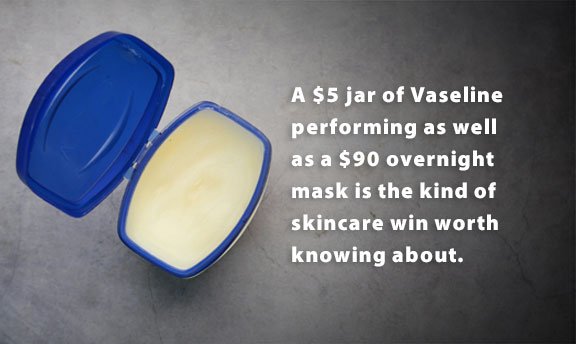
Slugging isn’t a miracle treatment, but it’s not hype either. For the right skin type, it’s an affordable, evidence-backed way to wake up with noticeably softer and more hydrated skin. A $5 jar of Vaseline performing as well as a $90 overnight mask is the kind of skincare win worth knowing about.
As with any skincare change, introduce it gradually and pay attention to how your skin responds. And if you’re unsure whether slugging is right for your specific skin concerns, it’s always worth a conversation with Dr. Monique S. Cohn, DO FAOCD.
Have questions about your skin barrier or which nighttime routine is right for you? Our team can help you build a personalized skincare routine backed by clinical expertise. We’re here to help. Book a consultation today to get recommendations tailored to your skin.

