

If you’ve noticed a persistent, bumpy rash clustering around your mouth — one that flares, fades a little, and then stubbornly returns — you’re not alone. Perioral dermatitis is one of the most frustrating skin conditions dermatologists see, precisely because it mimics other common problems like acne or rosacea, and it tends to worsen with the very things people instinctively reach for to treat it.
The good news? With an accurate diagnosis and the right treatment plan, perioral dermatitis is very manageable. Here’s what you need to know.
What Is Perioral Dermatitis?
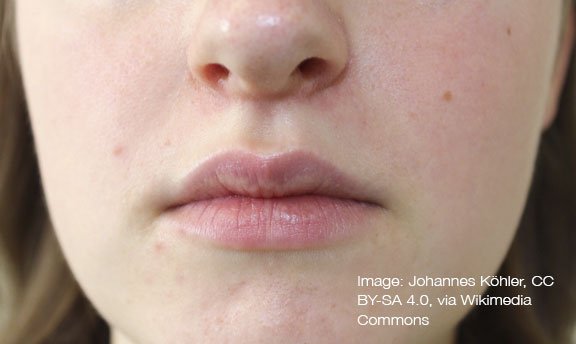
Perioral dermatitis (pronounced “perry-OR-al derm-ah-TY-tis”) is a chronic inflammatory skin condition that causes small, red, bumpy pustules or papules to develop around the mouth — particularly in the creases between the nose and lips, on the chin, and sometimes extending toward the cheeks or around the nose. Despite the name, it occasionally appears around the eyes, in which case dermatologists may refer to it as periorificial dermatitis. The American Academy of Dermatology recognizes perioral dermatitis as a distinct and treatable condition — one that responds well to professional care when diagnosed correctly.
The rash is typically:
- Red and irritated, with small pimple-like bumps or fluid-filled pustules
- Clustered, often appearing in a ring-like pattern around the mouth
- Accompanied by mild itching, burning, or tightness
- Absent from the skin immediately bordering the lip — there’s usually a small band of unaffected skin right along the lip line, which is one of the hallmarks that distinguishes it from other conditions
Perioral dermatitis most commonly affects women between the ages of 20 and 45, though it can develop in men, children, and people of all skin types and tones.
What Causes Perioral Dermatitis?
The exact cause of perioral dermatitis isn’t fully understood, but dermatologists have identified several key triggers and contributing factors.
Topical Corticosteroids (Steroid Creams)
This is the number one culprit. Using topical steroid creams — even mild, over-the-counter hydrocortisone — on the face can trigger or significantly worsen perioral dermatitis. Many patients unknowingly make the problem worse because the steroid temporarily reduces redness, but the rash rebounds even more intensely once the cream is stopped.
Inhaled corticosteroids (such as those used for asthma) can also contribute when the residue settles around the mouth.
Heavy Skincare and Makeup Products
Thick, occlusive moisturizers, foundations, and other heavy cosmetics can create the right environment for perioral dermatitis to develop or flare. Products containing petrolatum, paraffin, or certain mineral oils are particularly associated with triggering outbreaks.
Fluoride and Toothpaste
Fluorinated toothpastes have been implicated in some cases of perioral dermatitis. Some patients find improvement when they switch to a fluoride-free or gentler formula, though the evidence isn’t conclusive for everyone.
Hormonal Factors
Fluctuations in hormones — including those related to the menstrual cycle, birth control pills, or pregnancy — may play a role in triggering or worsening the condition.
Skin Barrier Disruption
Anything that compromises the skin’s natural barrier — including harsh cleansers, over-exfoliation, or environmental stressors — may contribute to flares.
The Most Common Trigger
Mint (including peppermint, spearmint and menthol) is the most common trigger we see for perioral dermatitis. The simple solution is eliminating mint flavored products like mint toothpaste, mouthwashes, lip balms, gummies and candies, foods and beverages.
Other Possible Triggers
- Rosacea or a personal history of skin sensitivity
- Prolonged use of nasal sprays containing steroids
- Certain sunscreens or cosmetic ingredients
- Physical or emotional stress
Is Perioral Dermatitis the Same as Acne or Rosacea?
This is one of the most common questions dermatologists hear — and it’s a fair one, because all three conditions involve redness and bumps on the face. But they are distinct conditions with different underlying causes and treatments.
Perioral Dermatitis vs. Acne:
Acne typically involves blackheads, whiteheads, and inflamed cysts that appear across the forehead, cheeks, and jawline. Perioral dermatitis stays clustered around the mouth and nose and doesn’t produce blackheads. Standard acne treatments (like benzoyl peroxide) often irritate perioral dermatitis rather than help it.
Perioral Dermatitis vs. Rosacea:
Rosacea causes flushing and diffuse redness across the nose and cheeks, sometimes with visible broken blood vessels. Perioral dermatitis is more localized and bump-focused, without the background flushing or vascular component typical of rosacea.
Getting the diagnosis right matters. Treating perioral dermatitis with the wrong products — including steroid creams that might be used for other rashes — can dramatically worsen the condition and make it harder to treat. This is why a visit to Advanced Dermatology & Cosmetic Surgery Center in Twinsburg, Ohio is so important — where accurate diagnosis is always the essential first step.
How Is Perioral Dermatitis Diagnosed?
There’s no definitive lab test for perioral dermatitis. Diagnosis is clinical — meaning the team at Advanced Dermatology & Cosmetic Surgery Center will assess the rash based on its appearance, location, and your full history, including what skincare products, medications, and topical treatments you’ve used.
Dr. Monique S. Cohn performs thorough evaluations to distinguish perioral dermatitis from contact dermatitis, seborrheic dermatitis, acne, rosacea, and other skin conditions that can look similar. Getting the right diagnosis at the start is what makes the difference between a treatment that works and one that makes things worse.
Treatment: What Actually Works
Treatment for perioral dermatitis requires patience — it typically takes weeks to months to fully clear — but the right approach is highly effective.
Step One: Stop the Triggers (“Zero Therapy”)
The very first step is almost always to eliminate suspected triggers, especially topical steroids. This can feel counterintuitive because steroid creams initially calm the redness, but stopping them is essential. Dr. Cohn may guide you through the withdrawal process, as the rash can temporarily flare when steroids are discontinued — a phenomenon sometimes called “rebound dermatitis.”
Additional lifestyle changes that often help:
- Simplifying your skincare routine down to bare essentials
- Switching to a mild, fragrance-free cleanser
- Avoiding heavy moisturizers, thick foundations, and occlusive products
- Trying a fluoride-free toothpaste
Topical Prescription Medications
For mild to moderate cases, topical prescription treatments are often the first line of medical therapy:
- Metronidazole gel or cream — An antibiotic with anti-inflammatory properties, frequently used as a first-line topical treatment
- Azelaic acid — Reduces inflammation and bumps, with the added benefit of being safe for sensitive skin
- Topical antibiotics (clindamycin or erythromycin) — Can help reduce bacterial involvement and inflammation
- Topical calcineurin inhibitors (pimecrolimus, tacrolimus) — Often used as an alternative to steroids for skin inflammation, particularly useful for steroid-induced perioral dermatitis
Oral Antibiotics
For moderate to severe perioral dermatitis, or when topical treatments alone aren’t sufficient, oral antibiotics are highly effective:
- Doxycycline is the most commonly prescribed and works primarily for its anti-inflammatory properties at the doses used for skin conditions
- Tetracycline is another commonly used option
- Minocycline may be used in certain cases
Treatment courses typically run 6 to 12 weeks, though Dr. Cohn and the team at Advanced Dermatology will tailor the duration to your individual response and skin condition.
What to Avoid When You Have Perioral Dermatitis
Knowing what not to do is just as important as knowing what to do:
- Don’t use topical steroids — even hydrocortisone from the drugstore — without guidance from Dr. Cohn or the Advanced Dermatology team
- Don’t scrub or exfoliate the affected area, which can worsen irritation
- Don’t pile on moisturizers hoping to soothe the rash — heavy products can trap bacteria and make things worse
- Don’t self-treat with acne products like benzoyl peroxide, which often irritate the skin further
- Don’t expect overnight results — even with the right treatment, improvement takes time and consistency
How Long Does It Take to Clear Up?
With appropriate treatment, most patients begin seeing improvement within four to six weeks. Full clearance typically takes three to four months. Some cases may take longer, particularly if the triggering factor (like a steroid cream) was used for an extended period.
It’s important to complete the full course of treatment that Dr. Cohn prescribes at Advanced Dermatology, even if your skin begins to look better before you’re done. Stopping treatment early is one of the most common reasons for relapse.
Can Perioral Dermatitis Come Back?
Yes — perioral dermatitis can recur, particularly if triggering factors aren’t fully avoided. Some patients experience occasional flares even after successful treatment. If this happens, returning to Advanced Dermatology & Cosmetic Surgery Center promptly for a reassessment is the best course of action — the sooner you’re seen, the faster you can get back on track.
The good news is that once you and Dr. Cohn at Advanced Dermatology have identified what triggers your flares, you’ll be far better equipped to recognize and manage future episodes quickly.
When Should You See Dr. Cohn at Advanced Dermatology?
You should make an appointment if:
- You have a persistent rash around your mouth that has lasted more than a few weeks
- Over-the-counter treatments haven’t helped — or have made things worse
- The rash is spreading or becoming more painful
- You’re unsure whether what you have is acne, rosacea, or something else
- You’ve been using a steroid cream on your face and noticed worsening redness or bumps
Early intervention leads to better outcomes and a shorter treatment course. Trying to manage perioral dermatitis on your own often leads to delays, incorrect treatments, and unnecessary frustration — and the experienced team at Advanced Dermatology & Cosmetic Surgery Center is here to help you skip all of that.
Get Expert Care at Advanced Dermatology & Cosmetic Surgery Center in Twinsburg, Ohio
At Advanced Dermatology & Cosmetic Surgery Center, Dr. Monique S. Cohn and her team specialize in diagnosing and treating the full spectrum of skin conditions — including those, like perioral dermatitis, that are frequently misdiagnosed.
Dr. Cohn is a board-certified dermatologist with extensive experience in both adult and pediatric dermatology. She understands that skin conditions affect more than just your skin — they affect your confidence and your quality of life. That’s why every patient at Advanced Dermatology receives individualized care: a treatment plan built around your unique skin, your history, and your goals.
Whether you’re dealing with a stubborn rash, a chronic skin condition, or concerns about your skin’s appearance, Dr. Cohn and her staff are here to help — with the most advanced techniques and a genuinely caring approach.
Ready to get answers and real relief? Schedule an appointment at our Twinsburg, Ohio office today.

